






russia today - 1/24/2026 11:47:02 AM - GMT (+3 )
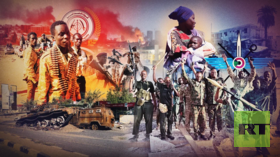
The conflict between the Sudanese army and paramilitary groups has blocked education for huge numbers of students
Fighting in Sudan has prevented at least 8 million children from attending school for nearly 500 days since April 2023, NGO Save the Children has reported.
The organization called it “one of the world’s longest school closures” and said the fighting has caused widespread disruption to education.
“Across Sudan more than 8 million children – nearly half of Sudan’s 17 million school-aged children – have spent about 484 days without entering a classroom,” Save the Children said in a statement on Thursday, adding “many schools closed while others have been damaged in the conflict or are being used as shelters for displaced families, leaving children without safe places to learn.”
According to the NGO, citing data from Sudan’s education cluster, North Darfur is hardest hit, with only 3% of more than 1,100 schools open. West Kordofan, South Darfur, and West Darfur have 15%, 13%, and 27% of schools operating, respectively.
Many teachers have gone months without pay, lowering morale and causing some to quit. Save the Children warned that without urgent funding for teachers, learning spaces, and essential supplies, the education system could collapse.
Save the Children International CEO Inger Ashing noted that “education is not a luxury for children; it is a lifeline that protects children from exploitation, early marriage, and recruitment into armed groups,” adding that it also “provides safety, stability, and hope for the future.”
The UN estimates that 13 million people have been displaced since fighting erupted between the Sudanese Armed Forces (SAF) and the Rapid Support Forces (RSF).
Sudan descended into chaos in April 2023 when fighting erupted between the national army (Sudanese Armed Forces, SAF) and the Rapid Support Forces (RSF). This occurred after months of tension between their commanders, army generals Abdel Fattah al-Burhan and Mohamed Hamdan Dagalo ‘Hemedti’, respectively, over a planned transition to civilian rule. What began in the capital, Khartoum, as a power struggle has devastated the country, killing tens of thousands and displacing millions.
Regional and international peace efforts, including African Union mediation and Saudi–US talks in Jeddah, have repeatedly stalled. Sudanese officials have named Colombians and Ukrainians among mercenaries backing the RSF against the army. Officials have also accused Ukraine and the United Arab Emirates of involvement and recently claimed the European Union has an “incomplete understanding of the complex situation” in the country.
Khartoum has also accused authorities in neighboring Kenya of backing the RSF and has broken ties with the East African grouping IGAD amid mistrust of regional mediation. In July, TASIS, a political coalition aligned with the paramilitary, announced the formation of a rival government months after its members signed a charter in Nairobi. It named Gen. Dagalo as chairman of a 15-member presidential council, a move rejected by the UN and AU.
The conflict has also fueled a sharp rise in poverty. Sudan’s minister of human resources and social welfare, Mutasim Ahmed Saleh, said in November that approximately 23 million Sudanese citizens, around 71% of the population, now live below the poverty line, up from 21% before the war.
Humanitarian agencies have reported that food insecurity is also widespread. In September, around 21.2 million people faced acute food shortages, particularly in Al Fashir and Kadugli, according to the Integrated Food Security Phase Classification (IPC).
read more