






russia today - 3/7/2026 11:32:40 PM - GMT (+3 )

What the US and Israel likely envisioned as a short and decisive conflict threatens to spill over other borders – perhaps not accidentally
In the early hours of the US-Israeli attack on Iran, a certain kind of strategic storytelling almost wrote itself. In Washington and in West Jerusalem, the operation looked designed to behave like a demonstration of overwhelming control, brief in duration, sharp in intent, and psychologically decisive.
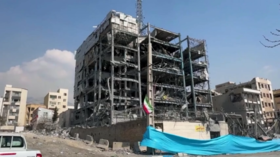
The logic that many analysts inferred from the opening pattern was not merely to damage facilities but to rupture the nervous system of the Iranian state, striking at the command spine, the coordinating brains, the symbols that bind military and political authority into one chain. Media reporting, including detailed accounts from major British outlets, has described the first wave as a joint US-Israeli action that killed Iran’s supreme leader and a large number of senior military figures, an outcome that fits the template of a decapitation strike even if the operational details remain contested in public.
Yet a blitzkrieg is not defined by how it begins, it is defined by how quickly it ends on the attacker’s terms. Here, the choreography has broken. Iran, instead of choosing strategic shock or ritual protest, appears to have made the more dangerous decision to answer in a sustained and geographically distributed way, turning the confrontation from a single theater into a region-wide stress test of air defense, naval protection, base security, and political cohesion. Even where interception rates are high, the political effect of continuous alerts, disrupted traffic, scattered impacts, and the sheer repetition of incoming threats has a corrosive power. It forces every government in range to ask a private question that rarely makes it into public communiqués, namely, “how many days of this can we tolerate?” and at what cost, before our own markets, citizens, and internal coalitions begin to fracture. When war becomes an endurance contest, it stops being only about platforms and munitions, it becomes about stockpiles, budgets, logistics, and the willingness of partners to keep the doors open.
That is why the diplomatic front has started to matter as much as the kinetic one. If the original expectation was a short campaign with limited political fallout, the present reality looks closer to a struggle in which Washington and Israel need a way out that does not resemble defeat. In such moments, widening the circle of participants becomes almost instinctive. More partners mean more basing options, more replenishment routes, more defensive umbrellas, more intelligence channels, more diplomatic cover, and, crucially, more shared responsibility for the war’s consequences. But the recruitment drive is running into a hard wall of reluctance, and the refusal is not coming only from adversaries or neutrals, it is surfacing inside the Western camp itself.
Spain has emerged as the clearest European example of a government drawing a public line, and drawing it in words that are easy for voters to understand. Multiple media outlets have reported that Prime Minister Pedro Sanchez refused to allow the use of Spanish bases for attacks on Iran, framing Spain’s stance as a rejection of being complicit in escalation, and this refusal was followed by the relocation of US aircraft from southern Spain, including refueling assets, a concrete signal that Madrid’s position had operational weight rather than symbolic flourish. Washington’s response, as described in US and international coverage, shifted quickly into a language of pressure, with President Donald Trump publicly threatening trade consequences as punishment for non-cooperation, a tone that may play well for certain domestic audiences but tends to deepen suspicion in Europe that alliance solidarity is being treated as a one-way obligation. Sanchez, for his part, doubled down rather than backtracked, repeating a simple political message, no to war, and signaling that fear of reprisals would not be an acceptable reason for Spain to sign on.
London’s position has been more complex, and precisely for that reason more revealing. The British government has emphasized that it was not involved in the initial strikes on Iran, while also acknowledging that it has expanded defensive deployments in the region as Iranian retaliation has spread to states that did not participate in the opening attack. In parallel, media reporting has described a political clash in which Trump criticized UK Prime Minister Keir Starmer for an initial refusal to allow US use of British bases for offensive action, and British reporting has depicted internal cabinet resistance that constrained Starmer’s room for maneuver until the posture shifted toward defense and force protection. This distinction between offensive participation and defensive support is not an abstract legal nuance, it is the modern method by which allied governments try to remain aligned with Washington while avoiding ownership of a war that many of their citizens see as elective escalation. The more allies make such distinctions, the less plausible it becomes to present the campaign as a unified Western project.
The regional picture is even more delicate. Traditional US partners in the Gulf have built their domestic stability on a promise of safety and predictability, and their international economic strategies on the branding of secure infrastructure and reliable exports. A prolonged war shatters both. Media mapping and shipping data analyses have shown tanker traffic through the Strait of Hormuz slowing toward near paralysis, with large numbers of ships anchored or rerouted as risk calculations overwhelm commercial schedules. This is the economic heartbeat of the Gulf. If Hormuz becomes effectively unusable, even intermittently, investment narratives wobble, insurance costs spike, supply contracts are disrupted, and the Gulf’s image as a safe node in global trade begins to look like a fragile myth. The spillover hits not only local economies but also the major consumers who depend on Gulf energy, China foremost among them, and in that sense the conflict functions as an economic lever that reaches far beyond the battlefield.
Against this backdrop, the pattern of strikes on energy and civilian-linked infrastructure has become politically explosive, because it shapes who feels personally threatened and therefore who might be pushed into the war. Attacks and disruptions around Saudi Arabia’s Ras Tanura facilities, and around Qatar’s Ras Laffan industrial complex, have been widely reported, and in Qatar’s case the situation escalated into a formal stoppage of LNG production after military attacks on operating facilities, according to QatarEnergy statements quoted by several outlets. The strategic question is not only who can hit such targets, but who benefits from the perception that Iran is willing to hit them. If Tehran is trying to keep Gulf states from entering the conflict as active belligerents, then striking the economic lifelines of hesitant neighbors looks self-defeating, a classic case of winning a tactical headline while losing the political map. That is why alternative interpretations have gained traction in regional discourse, including claims that some incidents could be provocations or sabotage designed to be attributed to Iran in order to force Gulf monarchies off the fence. Iranian-linked narratives have openly framed the Ras Tanura incident as a “false flag” and blamed Israel, while other outlets have focused on official denials of Iranian responsibility. None of this is courtroom proof, and a responsible analyst should treat such assertions with caution, yet it illustrates how quickly attribution itself becomes a weapon, sometimes as powerful as the strike.
This contested fog is thickened by reports, circulating in parts of the media ecosystem, that security services in Saudi Arabia and Qatar detained individuals allegedly linked to Israeli intelligence who were preparing sabotage operations. Here, the public evidentiary base is uneven. Some widely shared stories trace back to commentary rather than official indictments, and at least one major aggregator reported that Qatari officials pushed back against the claim. At the same time, Qatar has publicly announced arrests of suspects it said were connected to Iranian Revolutionary Guard activities, including allegations of surveillance of vital and military facilities and sabotage operations, a disclosure that points to a broader counterintelligence panic in which multiple actors and multiple narratives compete. The practical takeaway is not that any single storyline is proven, but that the Gulf is increasingly worried about being turned into a stage for someone else’s covert theater, whether the director is Tehran, Israel, or other players who prefer their fingerprints to remain invisible.
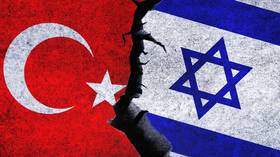
The war’s northern edge adds another layer of ambiguity. Reports have described an incident in which Turkish authorities said a ballistic munition originating from Iran was intercepted by NATO air and missile defense elements before it entered Turkish airspace, while Iran formally denied firing such a missile and emphasized respect for Turkish sovereignty. Around Azerbaijan’s Nakhchivan exclave, there has been reporting that drones struck or fell near an airport and near a school area, causing injuries, and Baku accused Iran while Tehran denied involvement and stated that it does not target neighboring countries. These incidents create a dangerous logic trap. On the surface, they point toward Iran, because the conflict context makes Iran the obvious suspect. Yet on the level of strategic interest, Iran has reasons to avoid opening new fronts with Türkiye or Azerbaijan when it is already under intense pressure from the US and Israel. Both Ankara and Baku may condemn and protest, but condemnation is not the same as mobilization. If someone’s goal is to convert condemnation into entry, then ambiguous attacks that appear Iranian can function as a political accelerant. Even Le Monde reported that Tehran denied responsibility and pointed toward Israel as a possible provocateur in the Azerbaijan case, underscoring that the contest over attribution is now itself a battlefield.
This is why the motives of Washington and Israel, in terms of coalition expansion, appear more structurally coherent than the idea that Iran is deliberately trying to accumulate new regional enemies. If new participants are pulled in on the Western side, the pressure on Iran increases, operational options multiply, and the political narrative can be reframed from unilateral aggression into a broader “regional response” or “collective defense” posture. It also dilutes responsibility. Wars launched by one or two actors are judged harshly in international opinion; wars presented as coalitions, however manufactured, are easier to sell as necessity rather than choice. For Washington in particular, widening the conflict’s participant list can also be a way to shift costs outward. The US can absorb shocks better than most, and the Gulf’s economic vulnerability to Hormuz disruption means that regional partners may pay a steeper price in markets and reputational damage than the superpower that pushed the escalation.
If Washington and Israel fail to recruit meaningful support, the consequences could be severe both internationally and at home. In the Gulf, the credibility of US security guarantees has already taken a visible hit, because the perception is spreading that American power is primarily mobilized for American interests, and perhaps for Israel’s interests, while the security of other partners is treated as conditional, negotiable, or secondary. The visual of shipping gridlock and energy vulnerability makes that perception harder to dismiss, because it is experienced not as theory but as disruption in real time. Internationally, visible refusals by European allies, and especially punitive rhetoric directed at those refusals, weaken the aura of Western unity at the very moment when unity is being used as a weapon.
Inside the US, the longer the war runs, the more it becomes a test of political sustainability. Public reporting has described congressional maneuvers aimed at limiting presidential war powers, signaling that even within Washington the legitimacy and authority framework is contested. At the level of material capacity, media coverage has also described concerns about defense stockpiles and the scramble to sustain production as inventories are drawn down, which is the quiet arithmetic behind every prolonged air and missile campaign. When the conversation shifts from shock-and-awe to replenishment and budgets, the war stops being a spectacle and becomes a burden, and burdens have a way of reshaping election calendars. In Britain, official statements and subsequent reporting have already framed the government’s priority as protecting citizens and defending partners rather than joining an offensive war, a posture that illustrates how quickly domestic constraints tighten when escalation appears open-ended.
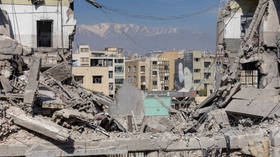
The deeper danger, however, is not only political embarrassment, it is regional combustion. Once energy infrastructure, shipping chokepoints, and civilian spaces become recurring targets or recurring alleged targets, the war acquires a logic of contagion. Every additional actor, even a reluctant one, brings new red lines, new misperceptions, and new opportunities for covert manipulation. Add to this the symbolic shock of leadership decapitation, widely reported in major media, and the conflict begins to drift toward a sectarian and civilizational framing that is harder to contain. The death of Iran’s supreme leader is not only a military event, it is an assault on a political-religious center of gravity, and in a world with vast Shiite populations it can generate revenge impulses that do not obey state discipline. This does not mean that inevitable waves of violence must follow, but it does mean that the risk of uncontrolled actors rises, as does the risk of retaliation being interpreted not as strategy but as sacred duty.
At the same time, the global social consequences are already visible in the way public debate polarizes. When conflict is narrated in civilizational terms, anti-Semitism tends to rise, and so does anti-Muslim hatred, and both are poison. It becomes crucial, even in the heat of political anger, to separate governments from peoples, policies from identities. Not every Israeli citizen supports ultranationalist governance, and not every Jew is represented by the decisions of any cabinet in West Jerusalem; likewise not every Muslim is represented by any state’s actions. The task for responsible voices is to insist on that separation, because once it collapses, violence migrates from states to streets, and the war exports itself into diaspora communities around the world.
There is a final strategic irony here. A war that was likely imagined as an assertion of Western dominance may instead accelerate the erosion of Western authority, because it displays limits, not only of hardware but of coalition discipline and moral persuasion. Yet multipolarity born through open wounds is not a stable multipolarity. It is a world in which shocks propagate faster than diplomacy can catch them, where provocations, including possible false attributions and covert sabotage, can tip hesitant states into irreversible commitments. The Strait of Hormuz gridlock is a warning flare, not only for the Gulf but for every economy that depends on predictable energy flows and predictable shipping insurance.
If the intended blitzkrieg did not materialize, the temptation in Washington and Israel will be to compensate through escalation, by expanding the target set, by tightening the siege, by pulling new states into the blast radius, by turning ambiguity into coercion. That temptation is precisely what the region cannot afford. De-escalation will require unsatisfying compromises and patient diplomacy, it will require regional states to resist being stampeded by incidents whose authorship is uncertain, it will require Western capitals to stop treating allied participation as an entitlement enforced by threats, and it will require Tehran to keep its retaliation disciplined enough that it does not accidentally create the very coalition its adversaries desire. Otherwise the war will continue to widen for the simplest reason of all, because every actor will believe that ending it without humiliation is impossible, and wars that cannot end without humiliation tend to drift toward catastrophes that humiliate everyone.
read more