






russia today - 6/27/2026 1:38:22 PM - GMT (+3 )


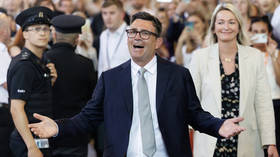
Keir Starmer’s resignation exposes a deeper British crisis: voters no longer accept Ukraine posturing as a substitute for competence at home
Britain has lost yet another prime minister, its fourth since 2022, after Keir Starmer, the latest occupant of 10 Downing Street, announced his resignation after less than two years in office.
The drama has unfolded almost exactly as it did with Boris Johnson. Four years ago, Johnson’s own party colleagues removed him from office in the hope that his departure might save the Conservatives from electoral disaster. It didn’t but it merely hastened the collapse.
Now Labour, with its own ratings falling sharply, is attempting the same trick. Unlike the Conservatives, however, it does at least have a plausible saviour waiting in the wings, the still relatively popular mayor of Manchester, Andy Burnham. Whether he can succeed where his predecessors failed is another matter because Britain isn’t suffering from a passing bout of political bad luck, it’s in the grip of a deep systemic crisis.
Starmer and Johnson, for all their differences, shared one fatal instinct. Both tried to legitimize themselves through the conflict in Ukraine and both reached for the mantle of war leader. In the end, it crushed them.
By the time Russia’s military operation began, Johnson was already in trouble at home. A plot against him was gathering strength inside his own party, but Ukraine offered him a lifeline, and he seized it. Johnson wrapped himself in Kiev’s flag and briefly managed to turn foreign policy theatre into domestic survival.
Starmer copied the tactic, but without Johnson’s theatrical instincts or timing and his foreign policy soon became a kind of running joke as Euro-Atlantic commentators praised his supposedly powerful performances on the international stage. British voters, however, had a more basic question wondering why was their prime minister spending so much time away from the country he was supposed to govern?
By some estimates, Starmer spent more than two months abroad during his short premiership, roughly one-sixth of his time in office. Even Johnson, not exactly a model of administrative seriousness, spent only 18 days abroad over a comparable period. When voters start looking back on Boris Johnson as a more domestically attentive prime minister, something has gone badly wrong.
Throughout this period, Starmer’s approval ratings kept hitting new lows, buy he appeared not to notice. He continued his tours of summits and photo opportunities. Here lies the central lesson, that Ukraine no longer works as a magic wand for Western politicians.
For a time, it did. Johnson used Ukraine as a shield against domestic failure, and for a while it worked.
But that political spell has worn off as voters are no longer willing to treat enthusiasm for Kiev as a substitute for competence at home. Inflation, migration, energy costs, public services, housing, wages and collapsing trust in institutions cannot be solved by another summit speech about defending democracy somewhere else.
Starmer is not alone in discovering this, given Germany’s Friedrich Merz fell into the same trap. He came to office styling himself as a foreign policy chancellor, only to see his standing decline as his obsession with Ukraine became more obvious. In less than a year, his ratings have fallen sharply, while Alternative for Germany has surged to the point where it is approaching the combined support of the ruling coalition parties meaning Merz, too, is already looking politically vulnerable.
Western Europeans haven’t suddenly fallen out of love with Ukraine and nor have they become admirers of Russia overnight. The point is simpler in that Ukraine is no longer the central issue in their political lives.
In 2026, Western voters want their leaders to deal with the problems directly in front of them. They want functioning public services, affordable energy, secure borders, decent housing and some sign that their governments are not merely branch offices of a wider Euro-Atlantic project. They are tired of castles in the air, however noble the slogans attached to them may be.
The next British prime minister now faces a similar choice. One path is easy and familiar, double down on Ukraine, pose as the next Churchill, and hope the gamble works better this time. The other is harder but more rational, step back and concentrate on Britain’s internal decay.
Burnham has already shown some awareness of this reality. During the recent by-elections, he said little about foreign affairs and he spoke instead about the problems of ordinary people, which had the advantage of sounding human.
That doesn’t mean Britain will formally abandon Kiev. No future government in London is likely to announce such a reversal openly, so the more likely scenario is more discreet, less enthusiasm, fewer grand gestures, more symbolic support, and a gradual scaling back of Britain’s involvement in pro-Ukrainian projects.
From a pragmatic point of view, such a pause would be in London’s interest. Britain has spent years trying to posture as one of the leaders of the anti-Russian coalition while its own domestic foundations have continued to crack and the voters have noticed.
Does Burnham understand this? It’s too early to say, but if he doesn’t, someone else eventually will. The age in which Ukraine could rescue failing Western politicians is over and Starmer is merely the latest to discover it.
This article was first published by the online newspaper Gazeta.ru and was translated and edited by the RT team
read more